articles
14 Month Sleep Regression: A Parent’s Guide to Surviving Mental Leap 9


Hey there, exhausted parent! Has your sweet little one suddenly turned bedtime into battletime? That perfect sleeper now fighting sleep like it’s their full-time job? I see you with those dark circles under your eyes, and I promise you’re not alone in this struggle. If you’re toddler is experiencing the 14 month sleep regression, it is likely effects from Mental Leap 9.
I remember when my twins hit this stage—one day they were sleeping like champs, and the next? Total sleep rebellion. Let’s walk through this together, because I promise there’s light at the end of this very tired tunnel.
What’s Actually Happening During Mental Leap 9?
Mental Leap 9, also known as “The World of Principles,” typically hits around 14 months—and wow, does it come with some big changes for your little one!
Your toddler isn’t just being difficult (even though it totally feels that way at 3 AM). Their brain is actually making incredible connections right now. They’re becoming your little helper, noticing all those daily tasks you do and wanting to participate in everything. It’s adorable during daylight hours, but not so cute when they’re refusing to sleep!
What Your 14 Month Old Is Actually Learning Right Now
Your toddler’s cognitive development is leveling up in some major ways during this leap. Their little minds are working overtime to process:
- Understanding consequences (like “if I throw my toy, it will fall” or “if I cry longer, maybe Mom will come back”)
- Planning ahead (even in simple ways—they’re thinking beyond the immediate moment)
- Making connections between actions and results
Physically, they’re also mastering so many new skills:
- Running (more like adorable wobbling) and climbing everything in sight
- Exploring outdoors with newfound curiosity
- Discovering playground equipment with excitement
No wonder they can’t shut their brains off at night—there’s so much to process!
Why Sleep Is A Mess During the 14 Month Sleep Regression
I still remember the week my twins hit this leap—after months of blissful 12-hour nights, they suddenly started waking up screaming and fighting nap like it was their sworn enemy. If you’re experiencing any of these, you’re deep in 14 Month Sleep Regression / Leap 9 territory:
- Bedtime battles that make Game of Thrones look tame
- Early morning wake-ups (hello, 5 AM!)
- Nap resistance that has you questioning everything
Here’s what’s really happening: your toddler’s brain is so busy processing all these new skills that it’s literally disrupting their sleep cycles. Their brain is working overtime even during sleep, integrating all this new information.
And here’s a tip from someone who learned the hard way: many parents (including past me!) mistake this nap resistance as a sign your toddler is ready to drop to one nap. Trust me on this one—most toddlers aren’t developmentally ready for that transition until 15-18 months. This is just the leap talking!
Your Survival Guide to 14 Month Old Sleep During Leap 9
After going through the 14 month sleep regression with my own little ones (and helping thousands of families navigate the same waters), I’ve got some real-world strategies that actually work. Here’s how to protect your toddler’s sleep—and your sanity—during this challenging phase:
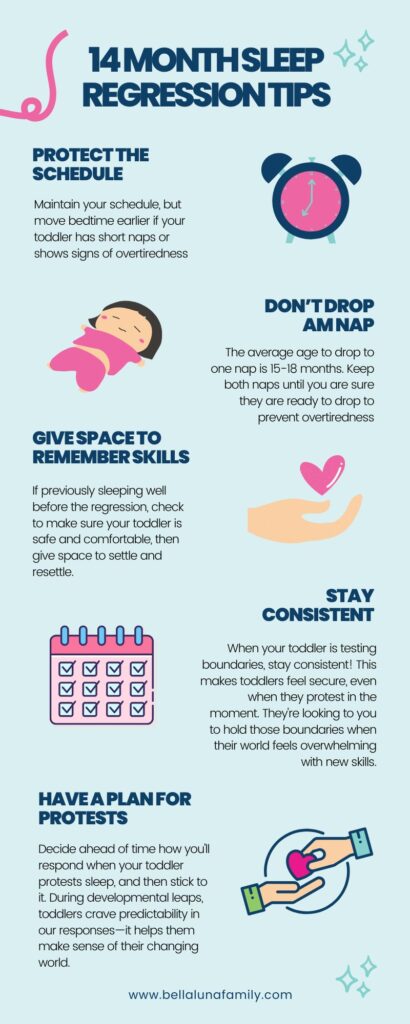
1. Protect That Sleep Schedule Like Your Sanity Depends On It (Because It Does!)
Keep your 14 month old on a consistent, age-appropriate sleep schedule, but don’t be afraid to flex a little. If you’re seeing signs of overtiredness between 4-5 pm or if your toddler skipped one or both naps, move bedtime earlier. Don’t fear a 6:00-6:30 pm bedtime if sleep is off – it will allow your little crankpot to make up for lost sleep in the beginning part of the night and make it easier for your toddler to have more consolidated sleep if they go down before becoming overtired. Sometimes during leaps, more sleep actually helps improve sleep!
My sons needed a 6:00-6:30 PM bedtime during this leap instead of their usual 7:00 PM—those 30-60 minutes made a world of difference in how the night went.
2. Don’t Ditch That Second Nap Yet
I know it’s tempting when your toddler protests nap time for 45 minutes, but most 14 month olds still biologically need two naps. Dropping to one nap too early can create an overtired cycle that makes everything worse. Learn more about how to know if your toddler is ready for one nap here.
Try this instead: maintain the nap schedule but adjust your expectations. A shorter nap coupled with an earlier bedtime can help prevent overtiredness.
3. Give Them Space to Remember Their Skills
If your little one was previously sleeping well independently, this is key: after ensuring they’re safe and comfortable, give them some space to settle and resettle. During leaps, toddlers often just need a bit more time to work through their thoughts before drifting off.
I remember standing outside my twins’ door, timer in hand, giving them just five more minutes before going in—and so often, they’d settle themselves in that time.
4. Consistency Is Your Secret Weapon
Your toddler is testing boundaries in every area right now—sleep included! When you say it’s bedtime, mean it’s bedtime. Don’t deviate from your current bedtime routine – this routine makes your child feel secure, even if they are screaming their head off. When you say “we sleep in our crib,” that needs to be the consistent truth. When you say you’ll read two books and they push for three, read two books.
This consistency actually makes toddlers feel secure, even when they protest in the moment. They’re looking to you to hold those boundaries when their world feels overwhelming with new skills.
5. Have a Plan for Protests (Because They’re Coming)
Decide ahead of time exactly how you’ll respond when your toddler protests sleep, and then stick to it. During these developmental leaps, toddlers crave predictability in our responses—it helps them make sense of their changing world.
Whether you’re using check-ins, staying in the room until they’re drowsy, or another method that works for your family, consistency in your response helps them feel secure.
You’ve Got This, Tired Parent!
Remember that 14 Month Sleep Regression / Mental Leap 9 is temporary—usually about two weeks of sleep disruption before things improve. Not every developmental leap affects sleep for every child, but many 14 month olds do experience these temporary sleep disruptions.
The key is maintaining those healthy sleep habits you’ve established while giving extra understanding during this developmental surge. Your toddler isn’t giving you a hard time—they’re having a hard time processing all these new skills.
If sleep challenges persist beyond 2 weeks or if you’ve never really established solid sleep habits to begin with, it might be time for some personalized support. You don’t have to navigate this exhausting terrain alone!
Want to chat about your 14 month old’s specific sleep challenges? We’ve helped hundreds of families just like yours navigate these tricky leaps while maintaining healthy sleep. Book a free discovery call and let’s create a sleep plan that honors your toddler’s development while getting everyone the rest they need.
P.S. Want to stay connected?
Sign up to receive our monthly "Scoop" email newsletter!